
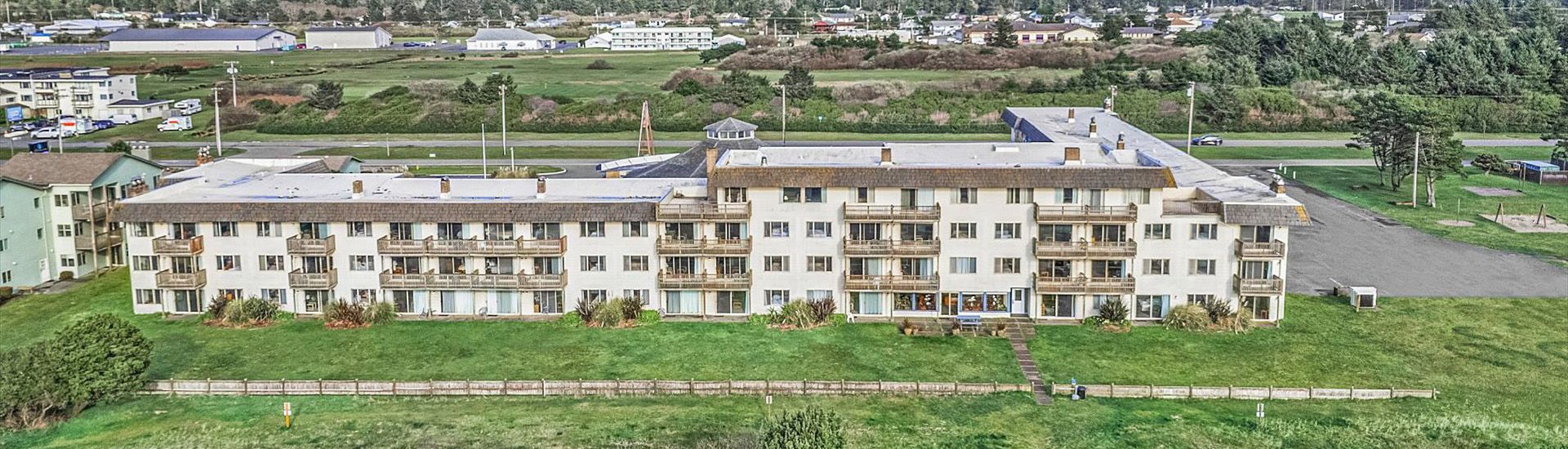
Long before Ocean Shores became the relaxed family beach destination it is today, the Washington coast town was being developed into something much bigger—a modern seaside resort community designed to attract vacationers, celebrities, golfers, and Pacific Northwest travelers looking for an upscale coastal escape.
Right in the middle of that era sat The Polynesian Resort.
With its dramatic mid-century architecture, beachfront location, tropical-inspired design, and reputation as one of Ocean Shores’ flagship resorts, the Polynesian quickly became one of the most recognizable places on the Washington coast. Over the decades, countless stories became attached to the property, but one of the most enduring involves Hollywood icon John Wayne.
Unlike some celebrity stories that drift into rumor over time, this one has real history behind it. For longtime Ocean Shores visitors, movie fans, and lovers of Pacific Northwest history, the connection remains one of the most fascinating pieces of the resort’s legacy.
John Wayne’s connection to Ocean Shores
John Wayne had strong ties to Washington State throughout his life. He spent time across the Pacific Northwest, particularly in coastal Washington, and frequently traveled aboard his yacht, the Wild Goose. He also developed a lasting connection to Sequim, where the John Wayne Marina now carries his name.
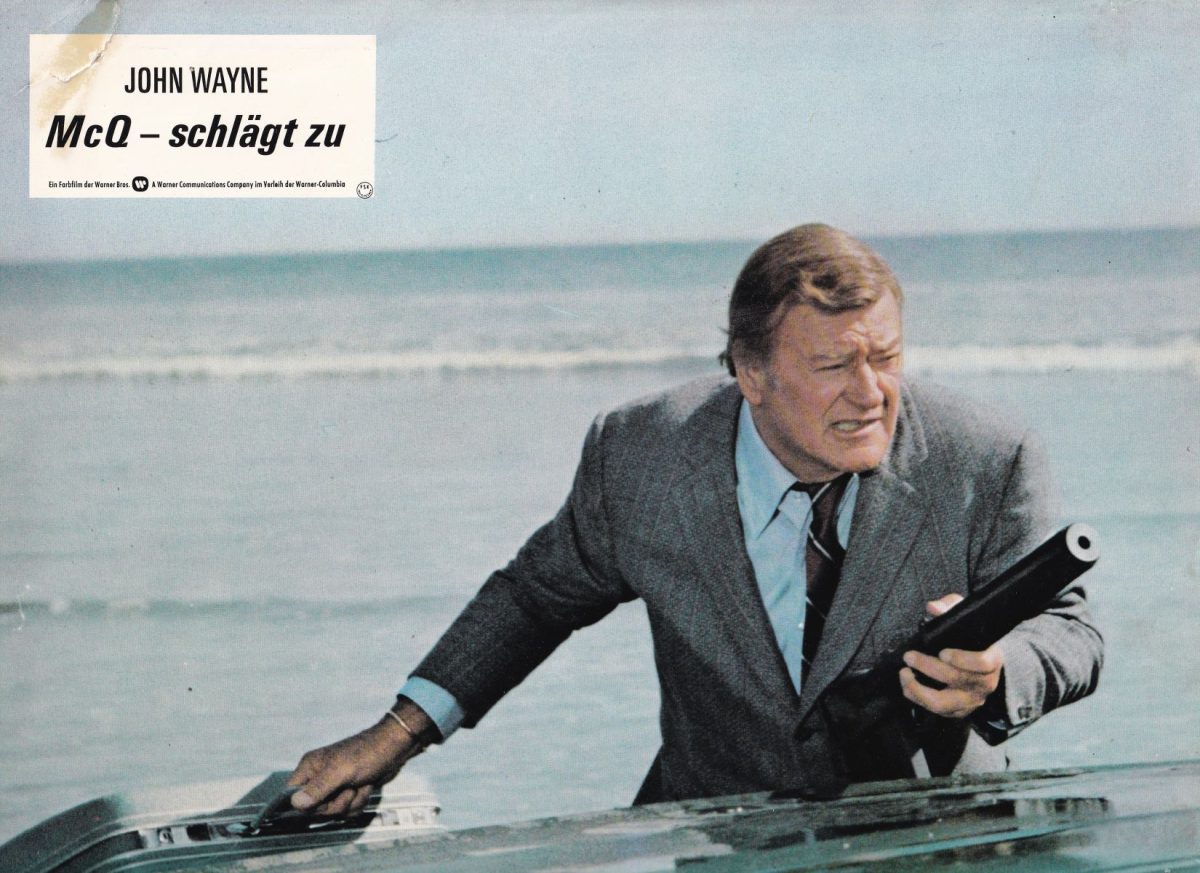
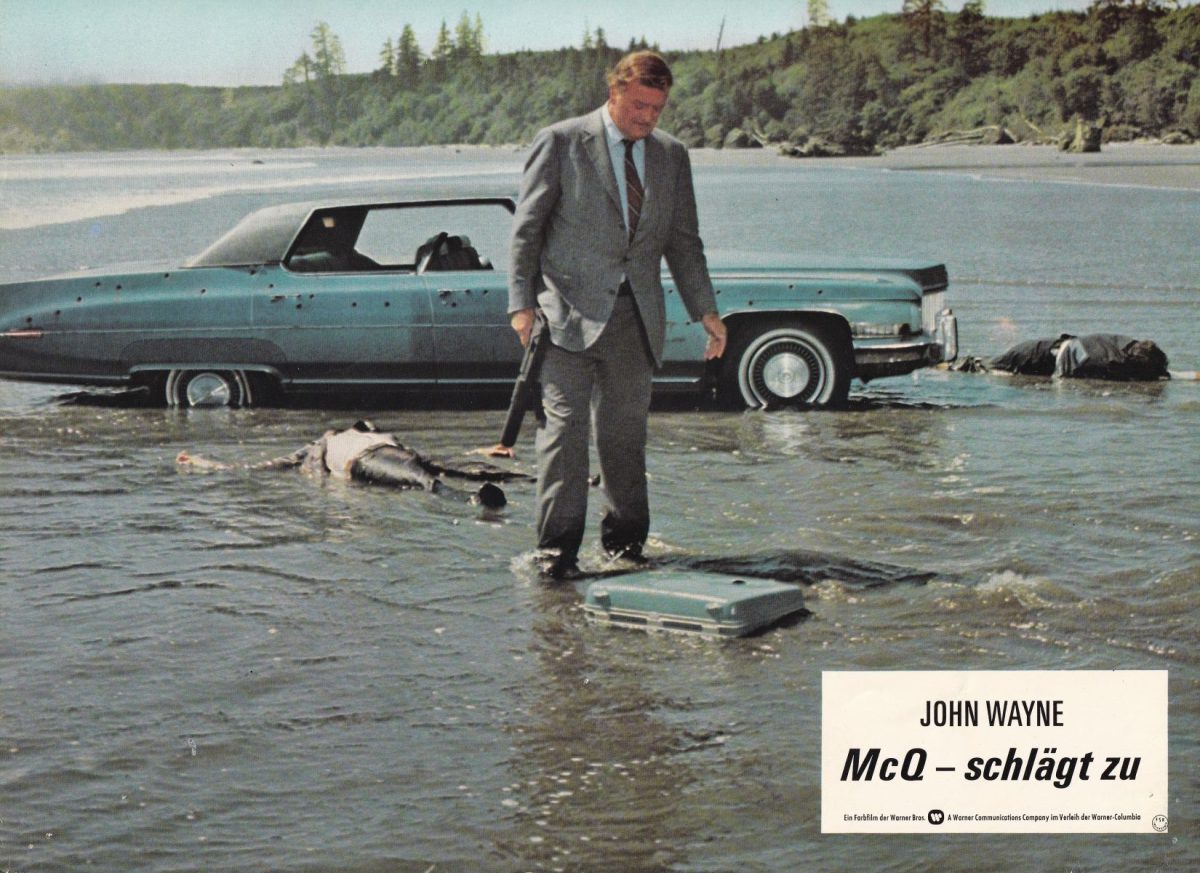
During the early 1970s, Wayne came to Washington to film McQ, a crime thriller released in 1974 and directed by John Sturges. The movie followed Wayne as a Seattle police detective and included filming locations throughout Washington State, including portions of the coast near Ocean Shores.
While filming McQ, Wayne and members of the production crew stayed at The Polynesian Resort in Ocean Shores—specifically in our penthouse Unit 401, which we have since named Prawn Wayne.
Filming for McQ began in Washington on June 4, 1973. The production spent roughly six weeks filming throughout Seattle before moving west to Ocean Shores for an additional three weeks of coastal filming. The Ocean Shores portion of production focused heavily on the movie’s climactic beach chase scenes and other action sequences filmed directly along the Washington coast.
“John Wayne Was Here”
One of the best resources documenting Wayne’s connection to the Washington coast is the book John Wayne Was Here by Roland Schaefli, which specifically mentions the Polynesian Resort and Wayne’s time in Ocean Shores.
According to the book, Wayne and members of the McQ crew stayed at the Polynesian during filming, and the actor became familiar enough with the property that staff remembered him well afterward. The kitchen staff reportedly recalled that Wayne found their cooking very much to his liking, which feels appropriately Pacific Northwest considering how many coastal vacations eventually revolve around seafood and large meals after long days outside.
The book also notes that Wayne returned occasionally in the years after filming when the Wild Goose cruised the waters off the Washington coast, reinforcing that his connection to the area extended beyond a single movie production.
For visitors interested in Pacific Northwest history, old Hollywood stories, or Ocean Shores nostalgia, John Wayne Was Here adds another layer to the resort’s history and helps preserve a part of the Washington coast’s celebrity-era past that many people today may not realize existed.
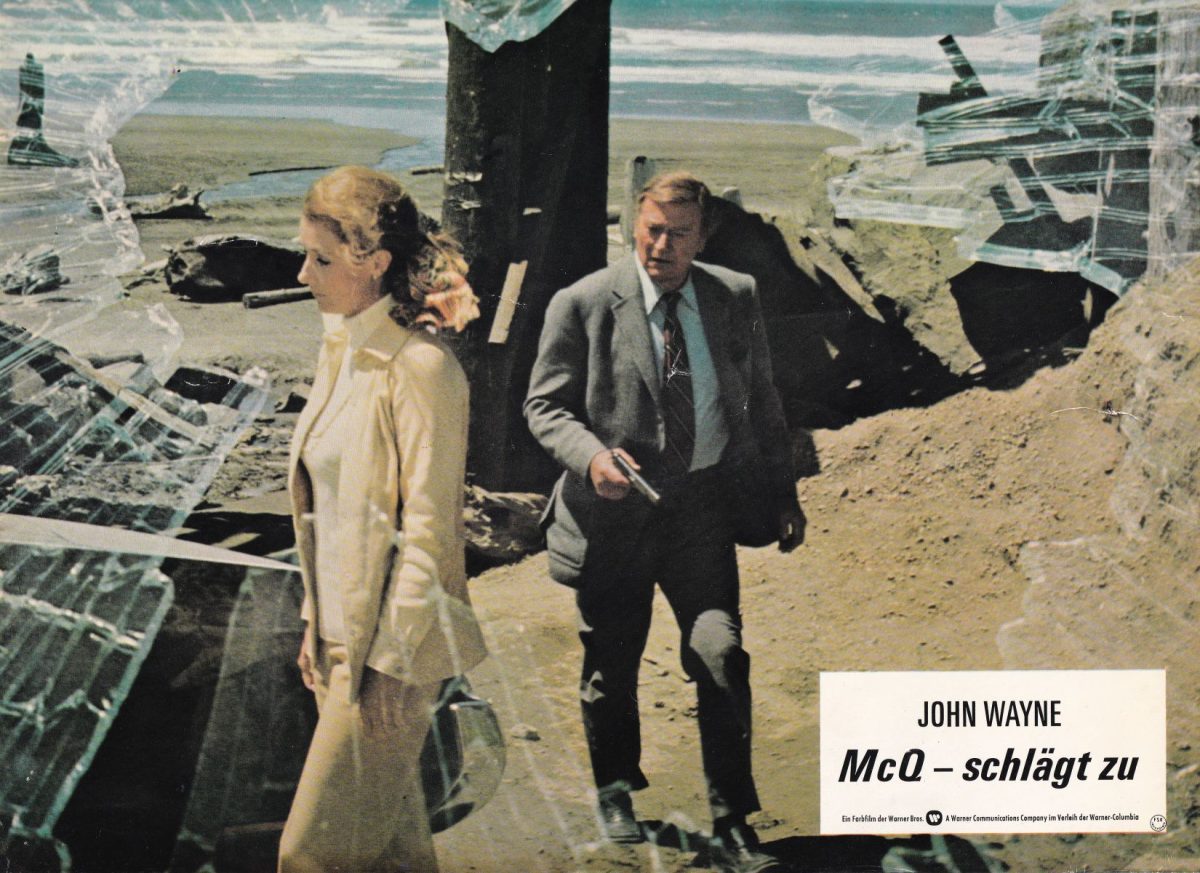
John Wayne in McQ
Released in 1974, McQ was a major departure from the classic western roles that made John Wayne famous. Instead of playing a cowboy, military leader, or frontier hero, Wayne portrayed Seattle police detective Lon McQ: a rough, independent officer investigating corruption within the police department after the suspicious death of his partner.
At the time, gritty urban crime movies were dominating theaters. Films like Dirty Harry, The French Connection, and Bullitt had become hugely popular, and studios wanted tougher, more modern detective stories. McQ was essentially an attempt to place John Wayne into that newer style of action film while still maintaining the larger-than-life personality audiences expected from him.
The result is one of the stranger and more fascinating films in Wayne’s career.
Instead of horses and desert landscapes, Wayne drives muscle cars through Seattle streets, investigates drug smuggling operations, survives shootouts, and delivers one-liners while wearing leather jackets and turtlenecks that somehow still look unmistakably “John Wayne.”
The famous beach chase scene
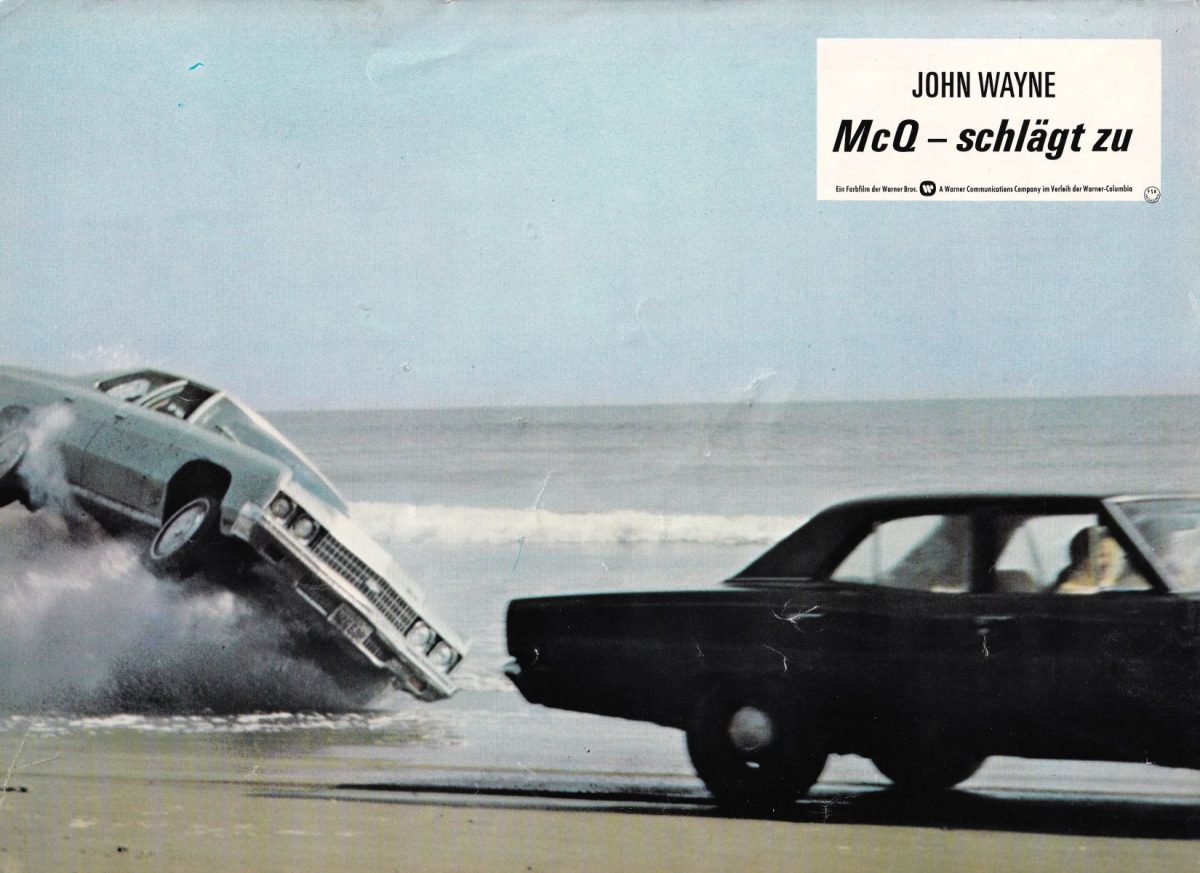
One of the most memorable sequences in McQ involves an extended high-speed chase filmed along the Washington coast, with cars racing directly across the beach in classic 1970s action-movie fashion.
The sequence became famous not only for its scale, but because it introduced a major stunt innovation to Hollywood filmmaking. During the chase, the production performed what is widely recognized as the first car rollover stunt created using an air cannon system instead of traditional ramps.
Before McQ, most movie car flips relied on hitting ramps or obstacles at dangerous speeds. For McQ, legendary stuntman Hal Needham experimented with a compressed black-powder cannon system mounted underneath the vehicle that could force the car into a controlled rollover during the chase scene. At the time, it was considered groundbreaking stunt work.
The technology later became standard throughout Hollywood action filmmaking and eventually evolved into the air-rig systems still used in major productions today. In other words, a stunt sequence filmed on the Washington coast for a John Wayne detective movie helped change movie car chases forever.
The stunt itself was dangerous enough that an early practice run reportedly nearly killed Needham when the cannon charge was accidentally overpowered during testing.
Watching the sequence today, part of what still makes it impressive is how physically real everything feels. The cars are actually tearing across wet sand. The crashes are practical effects. And the Pacific Northwest coastline becomes part of the action itself rather than just background scenery.
For Washington film history, the scene remains one of the most recognizable action sequences ever filmed on the state’s coastline.
Why Washington was chosen for filming
One reason McQ stands out today is because so much of the movie was filmed on location throughout Washington State instead of relying heavily on studio sets.
Seattle serves as the film’s primary backdrop, showcasing the city during the early 1970s before massive modern redevelopment changed much of its appearance. The movie captures old Seattle streets, waterfront areas, residential neighborhoods, and highways in a way that almost functions as a historical time capsule now.
At the time, Washington offered filmmakers dramatic scenery, recognizable Pacific Northwest atmosphere, and enough distance from Hollywood to give productions a slightly rougher, more realistic feel. McQ leaned heavily into that mood.
The coastal weather, gray skies, beaches, and maritime settings all helped create the film’s gritty tone, which made Ocean Shores and the surrounding coast a natural fit during production.
Book your stay at the Polynesian
Today, guests staying at The Polynesian Resort become part of a small piece of Washington coast history themselves. From its early days as one of Ocean Shores’ landmark beachfront resorts to its connection with John Wayne and McQ, the Polynesian has remained woven into the story of this small coastal town for generations.
Whether you’re visiting for storm watching, beach walks, family vacations, or simply the nostalgia of a classic coastal resort, staying at the Polynesian offers more than just an oceanfront getaway. It offers a chance to experience one of Ocean Shores’ most enduring and memorable historic properties.